


Share This Article
The NATO Tiger Meet 2025, hosted by the Portuguese Air Force’s Esquadra 301 at Beja Air Base, wrapped up on 3 October after two weeks of intense multinational flying and collaboration. Running from 21 September to 3 October, the event once again highlighted why the Tiger Meet is regarded as one of NATO’s most enduring and respected aviation traditions.
First held in 1961, the Tiger Meet has always been more than just a military exercise. It brings together NATO squadrons that share the tiger as their emblem, combining rigorous training with a celebration of camaraderie and squadron heritage. The 2025 edition stayed true to that spirit, showcasing advanced tactical operations while emphasizing the teamwork and shared identity that define the Tiger Meet.
Beyond the impressive tiger-painted jets, the 2025 Tiger Meet was about much more than appearances. At its core, it tested NATO’s ability to operate together in fast-changing, complex scenarios. Participating nations trained together in composite air operations (COMAO) designed to simulate modern combat conditions. These missions tested multinational crews in coordination, command structures, and tactical flexibility.
Host and Organization
Beja Air Base, located in the Alentejo region of southern Portugal, provided the ideal setting for the 2025 event. Its expansive training areas, favorable weather, and logistical infrastructure supported both intensive flying and large-scale hosting.
The Portuguese Air Force (Força Aérea Portuguesa) invested significant effort in preparing for the exercise, ensuring smooth coordination between national agencies, NATO representatives, and visiting units. The base became a temporary international hub — housing more than 1,000 personnel and over 70 aircraft for the duration of the meet.
Participating Nations and Units
The 2025 Tiger Meet brought together a diverse mix of NATO and partner squadrons, reflecting the alliance’s operational breadth. Notable participants included:
- Esquadra 301 (Portugal) – F-16AM/BM Fighting Falcon (host unit)
- 6 EL (Poland) – F-16C/D Fighting Falcon
- 2.Staffel (Austria) – EF-2000 Eurofighter
- 142 Esc (Spain) – EF-2000 Eurofighter
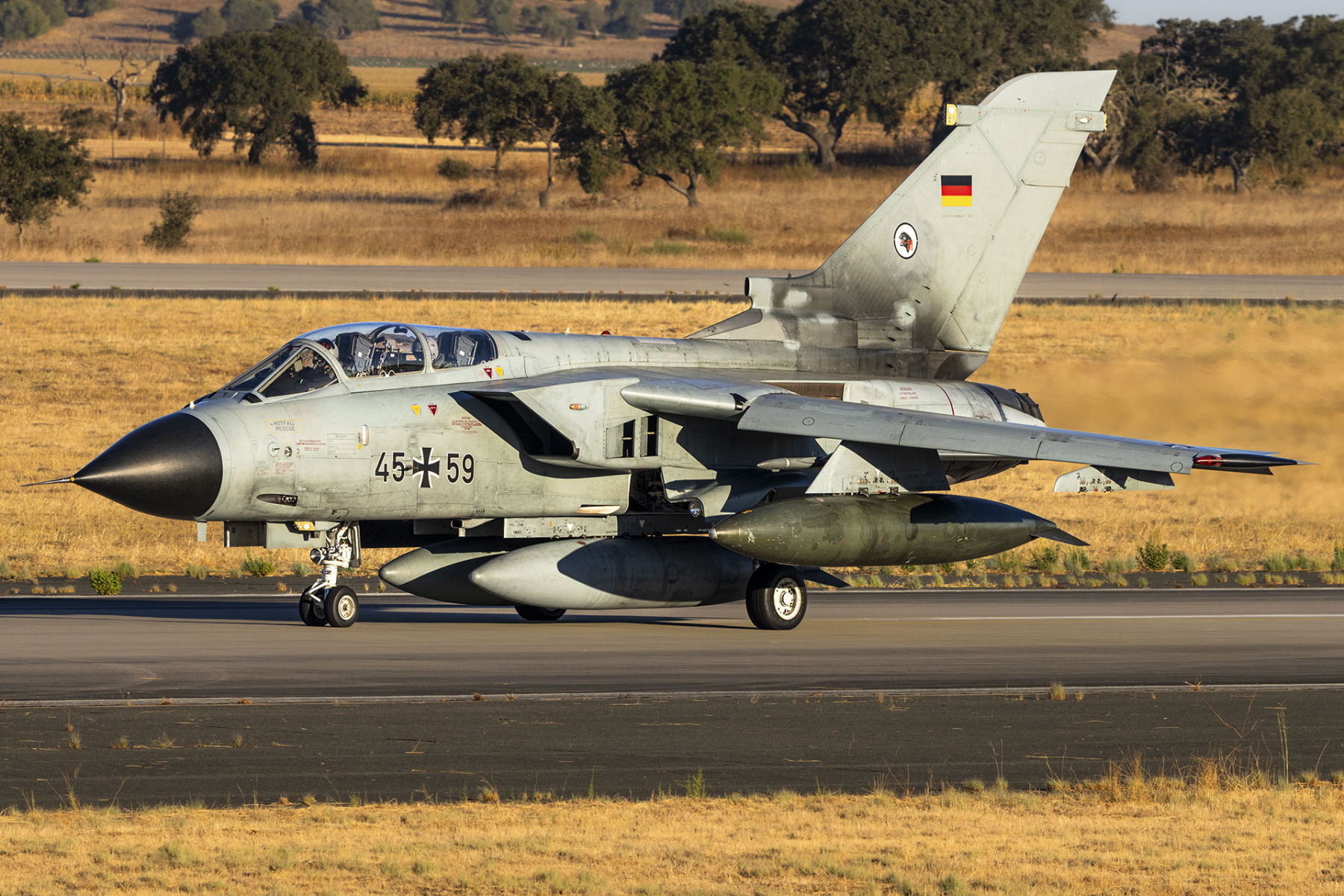
- TaktLwG 51 “Immelmann” (Germany) – Tornado IDS/ECR
- 335 Mira (Greece) – F-16C/D Fighting Falcon
- Staffel 11 (Switzerland) – F/A-18 Hornet
- 12° Gruppo (Italy) – Eurofighter Typhoon
- 192 Filo (Turkey) – F-16C/D
- 814 Naval Air Squadron (UK) – Merlin HM2 helicopter
- 21° Gruppo (Italy) – HH.101 Caesar
- EHRA 3 (France) – SA-342M Gazelle
- 211 Tactical Squadron (Czech Republic) – JAS-39 Gripen
Support elements included a NATO AWACS detachment and Portuguese transport and SAR assets, ensuring full mission coverage.
This range of aircraft types — from fast jets to maritime patrol and rotary-wing platforms — allowed for comprehensive mission profiles and realistic coalition scenarios.
Operational Focus and Key Training Outcomes
Crews carried out fast-paced missions simulating contested airspace, flying together in mixed formations of fighters, helicopters, and support aircraft. They practiced interdiction strikes on time-sensitive targets, coordinating attacks while responding to changing threats.
Electronic warfare was a key focus, with pilots running SEAD missions to suppress simulated enemy defenses and practicing radar avoidance. After each sortie, teams conducted detailed debriefs to review performance, share lessons, and improve coordination across multinational units. Some flights included support for ground troops and naval forces, highlighting joint operations.
The 2025 Tiger Meet emphasized teamwork and information sharing, helping crews operate as a connected force. Overall, it strengthened tactical skills, decision-making, and cooperation across NATO in realistic, high-pressure scenarios.
The Spirit of the Tiger
As always, Tiger Meet 2025 carried a cultural and symbolic dimension that extended beyond tactical training. The “tiger” remained a unifying emblem — a symbol of strength, agility, and brotherhood among allied squadrons.
Every squadron brought aircraft painted with bold, creative tiger designs, showing off national pride and personality. These liveries weren’t just eye-catching — they boosted morale and reminded everyone of the shared identity and spirit of the Tiger community.
The event culminated in the presentation of traditional awards:
- The Silver Tiger Trophy was awarded to Staffel 11 (Switzerland)
- The Best Tiger Aircraft was awarded to Esq 301 (Portugal)
These honors underscored the balance between competition and cooperation that lies at the heart of the Tiger tradition.
Conclusion
The NATO Tiger Meet 2025 successfully combined tactical expertise, international cooperation, and cultural heritage. For two weeks, Beja Air Base became a hearth of NATO unity.
Looking ahead, the next Tiger Meet is scheduled for Araxos, Greece, home to the 335 “Tiger” Squadron and the 336 Squadron. The Tigers are set to return to the sunny skies of Greece in May 2026, following their previous visit in 2022.
